
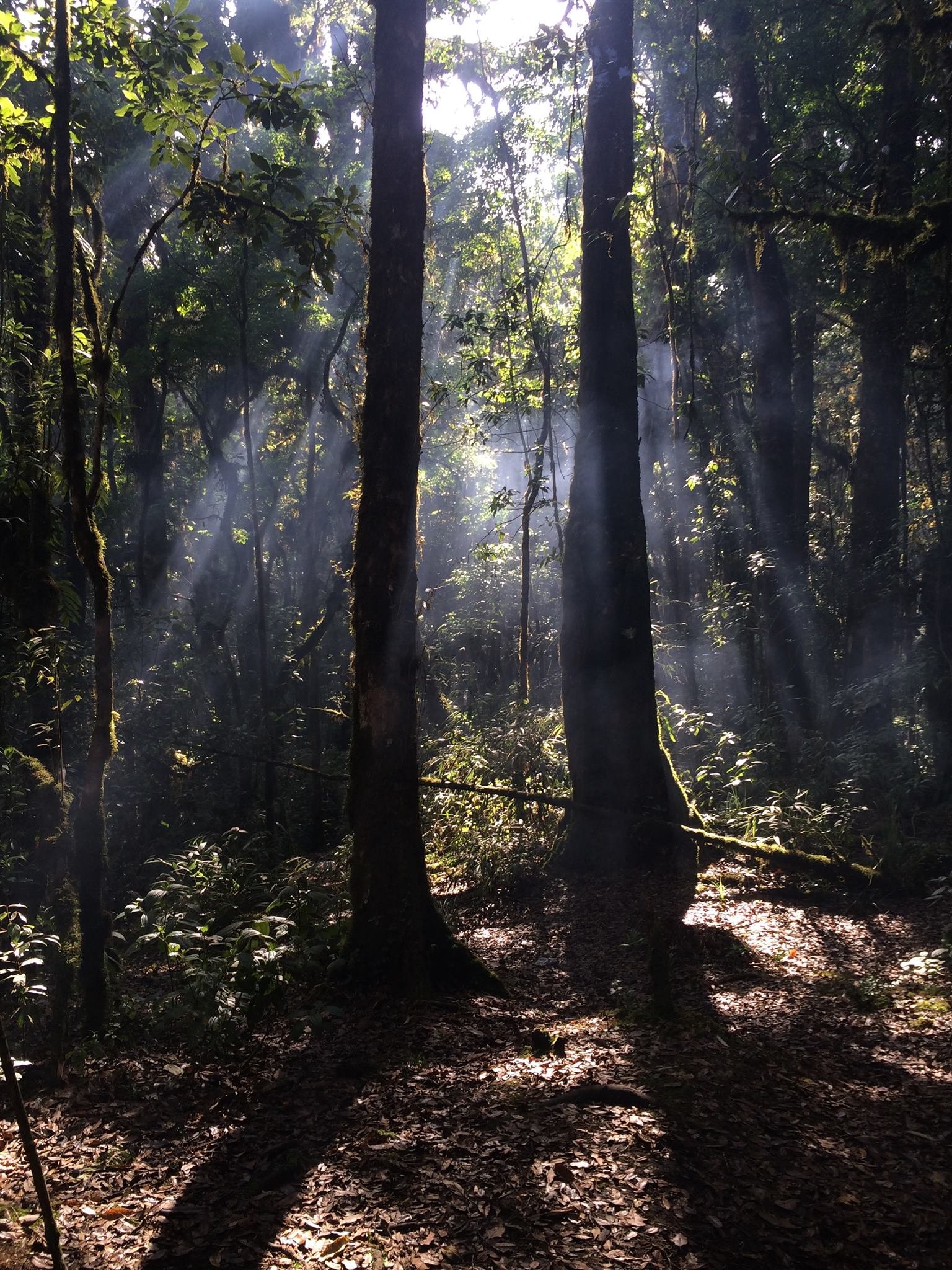
Our Research
The goal of our research program is to understand the adaptive mechanisms by which biodiversity is generated and maintained in response to novelty. To accomplish this, we use a biodiversity genomics approach integrating laboratory and field-based experiments to understand the evolution of life history traits in natural populations, cutting-edge “-omic” methods to connect the genotype and phenotype of complex traits, and quantitative associations of how patterns of trait complexity and biodiversity are shaped by their surrounding environments.

Adaptive Response to Changing Environments
Speciation is a multi-level process unfolding through time and space. Hybrid zones offer a rich framework to studying the speciation process, as well as other adaptive and microevolutionary processes. Through generations of recombination shuffling divergent genomes, hybrid zones can reveal how selection acts upon multiple axes of variation (e.g. genotype, phenotype) across whole organisms in natural populations. Our current research uses a classic hybrid zone to study how species are adapting to novel and changing environments and how these adaptations lead to the formation, persistence, and/or collapse of species boundaries.

Evolution of Trait Novelties
Biological novelties occur at multiple levels of biological organization from phenotypic changes to changes at the molecular level. The evolution of these novelties can give us insight into how organisms have adapted and evolved to their surrounding environments and how their environments may, in turn, evolve or adapt to those novel traits. Our research explores how synthesized chemical defenses have evolved in bufonid toads and what underlying genes and pathways may be involved in toxin synthesis in these organisms.
Header photo: Parque Nacional Montaña de Celaque, Honduras 2015
